Robotic pool cleaners: how they work and what to look for
Disclosure: Some links in this guide are affiliate links. If you buy through them we may earn a commission, at no extra cost to you. We only link to products the guide is about. How we make money.
On this page
The short answer
A robotic pool cleaner is "a self-contained, electrically powered device," says Maytronics. 1 It works "without relying on your pool's existing pump or filtration system." 1 Compare how it's powered, whether it climbs walls, and how its filter works.
What a robotic pool cleaner is
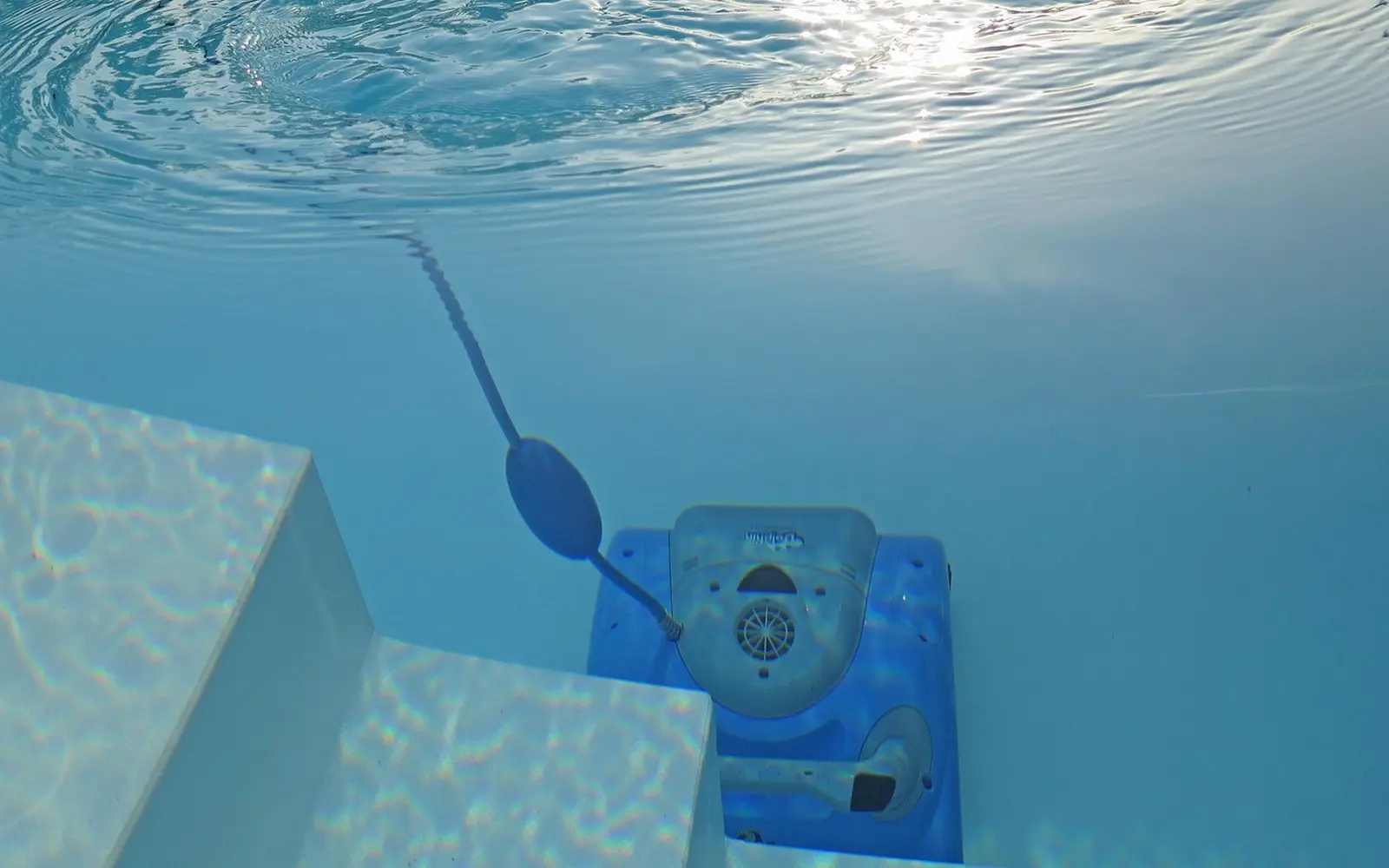
A robotic pool cleaner is a small machine that drives around your pool and cleans it by itself. You may also see it called a pool cleaning robot or a robot pool sweeper. They're all the same idea.
The key point is that it works alone. Maytronics makes Dolphin robots. It says a robotic pool vacuum "operates on its own low-voltage power supply" 1. It also says "the pool's pump and filtration system are not involved at any point" 1.
That sets robots apart from other automatic cleaners. Suction cleaners connect "to the pool's skimmer or suction line," says Maytronics. 1 Pressure cleaners use "pressurized water from the return line" 1. A robot doesn't plug into your plumbing at all.
How it cleans
A motor drives wheels or tracks. Brushes and suction pick up what's on the surface. The debris goes into a filter inside the robot.
That has a side benefit. Robots "collect debris internally," says Maytronics. 1 So "your pool's sand or cartridge filter handles significantly less load" 1.
Beatbot adds that each unit "has a filter that catches leaves, dust, and other small particles" 3. Cleaning it often "keeps it working at its best" 3.
Many robots map the pool first. Beatbot says many models use "gyroscopes or accelerometers to scan the pool's layout" 3. Some use "LiDAR or built-in cameras to make a 3D map of the pool" 3. Maytronics says modern robots "use intelligent navigation systems to ensure maximum coverage" 1.
Corded or cordless
This is the first big choice. Maytronics explains how corded robots work. Maytronics says "a floating low-voltage cable connects the robot to a power supply plugged into a standard outlet" 1. A cordless robot "runs on a built-in lithium-ion battery rather than a power cable" 1.
Maytronics calls corded cleaners "built for long hours of operation" 2. It points to "continuous power" and says they suit pools that are "perfect for larger or heavily used pools" 2. For cordless robots it points to "unbeatable convenience" and cleaning "without the worry of entanglement" 2.
Run time varies a lot. Beatbot says cordless models "use rechargeable lithium-ion batteries that last between 1.5 and 3 hours on a single charge" 3. It says premium ones "can run for up to five hours" 3. Check the figure for your model on the maker's own page.
For anything electrical, follow the maker's manual for your exact model. That covers where to plug in the power supply and whether anyone may swim while the robot runs. Don't improvise.
Floor only, or walls and waterline too
Not every robot climbs. Maytronics says "most robots clean the floor, while some can also scrub algae from the walls and clean the waterline" 1.
It calls wall climbing "one of the most important specifications to check before purchase" 1. It also notes that "floor-only models are less expensive but leave walls and the waterline requiring manual scrubbing" 1. That's the trade-off in one line.
The waterline matters because floating grime collects there. Beatbot says "body oils, sunscreen, and other things that float tend to gather here" 3. Only some models reach it.
What to compare before you buy
Use this short list when you read a spec sheet. Take every number from the maker's page.
- Power: cord or battery, and the battery run time if cordless. - Surfaces: floor only, floor and walls, or floor, walls and waterline. - Navigation: whether the maker says it maps the pool. - Filter: how it's emptied and cleaned. - Pool match: the pool size and type the maker says the robot is made for. - Price: note the date and currency, and whether it's a sale price.
We haven't used these robots, so we don't rank them or pick a winner. A maker's range pages are a good place to start. Maytronics, for example, has a "Cordless" category on its Dolphin pages. 2
Which robot is top-rated?
Many people search for a favorite or a cordless pick. We can't name one. We haven't tested any, and the right robot depends on your pool's size, shape, surface and debris.
A better question is which features your pool needs. A big pool with many leaves points to a different robot than a small above-ground pool. Work through the list above. Then compare the makers' own specs for the models that fit.
Frequently asked questions
Does a robot cleaner use my pool pump?
No. Maytronics says the pool's pump and filtration system "are not involved at any point," because the robot runs on its own power supply. 1
Do all robots climb walls?
No. Maytronics says "most robots clean the floor, while some can also scrub algae from the walls and clean the waterline." Check the maker's specs. 1
How long does a cordless robot run on one charge?
It depends on the model. Beatbot says cordless models last "between 1.5 and 3 hours on a single charge," with premium ones running "up to five hours." Check your model's page. 3
Which cordless robot should I pick?
We don't rank robots and haven't tested any. Compare the run time, surfaces cleaned and pool size on each maker's own page, then pick the one that matches your pool.
Sources
- What Is a Robotic Pool Cleaner?, Maytronics. Checked 2 November 2026.
- Corded or cordless: which is right for you?, Maytronics. Checked 2 November 2026.
- How Do Pool Robot Cleaners Work, Beatbot. Checked 2 November 2026.